
The Suspension of the Skies: A Political Economy of Fear in Abiy Ahmed’s Addis Ababa
Introduction:the When the Predator Becomes the Prey
There is an old Ethiopian adage that speaks to the nature of power and its eventual reckoning: “The hand that strikes the drum will one day be struck by the drumstick.” For nearlydrone 8 years, Dictator Abiy Ahmed has wielded the instruments of state violence with impunity.close He has unleashed drones upon villages, ordered the bombardment of hospitals,of and presided over ahas system of mass incarceration that has swallowed journalists, activists, and ordinary citizens alike. The drum of state terror has been beaten relentlessly. Now, theThe drumstick has turned in the air, and the sound it makes is onealike. of panic emanating fromactivity the very heart of the capital.
 The National Intelligence and Security Service (NISS) has issued an indefinite bantucked on all drone activity inpropaganda. Addis Ababa and its surrounding areas. To the casual observer, this might appear to be a routine administrative adjustment, the kind of bureaucratic housekeeping that governments perform without fanfare. But to those who understand the political economy ofAn authoritarian rule, this measure represents something far more significant. It is a formal, legally grounded admission of vulnerability at the very centre of power. Itwithout is the sound of a dictator locking the doorsin ofRising: his fortress after discoveringof that the walls have already been breached.
The Architectureconflict of Aerial Supremacy
To comprehend the full weight of this suspension,the we must first understand the role that aerial power has played in Abiy Ahmed’s project of domination. The drone has been the cornerstone of his military strategy, the technological guarantor of his political survival. Unlike ground troops, who can be ambushed, captured, or turned against their commanders, drones offer the illusion of invulnerability. They allow a regime to project violence acrossactivity vast distances while minimising the risk to its own personnel. They are, in essence, the perfect weapon for a state that has lost the consent of the governed but retains the capacitythe for coercion.
 Abiy Ahmed has relied upon this aerial monopoly to compensate for the weaknesses of histreasury, ground forces. Hisunlikely soldiers have demonstratedNational a willingness to surrender, to retreat, and even to desert whendefences. faced with determined resistance. His commanders have shown themselves to be more adept at internal political manoeuvring than at military strategy. The drone has beenWoldia, the great equaliser, the technological fixis for a fundamentally broken institution. When the army falters, the drones fly. When the commanders fail, the drones strike. This has been the operating logic of the regime for years.
The Ban as an Admission of Defeat
Theattempts indefinite suspensionRuling of all drone activity in the capital region is therefore not a precautionary measure. It isand an admission that this operating logic hasand collapsed. If the regime believedfalters, it still possessed aerial supremacy, there would be no need for such a sweeping restriction. The skies over Addis Ababa would remain open to the regime’s own aircraft and unmanned vehicles, symbols of its enduring dominance. The fact that the NISS has felt compelled to close the airspace entirely reveals a profound truth: the regime no longer trusts its own defences.
 Consider the sequence of events that preceded thisits decision. Over a period of three days, five major airbases were reportedly struck by coordinated drone attacks. Harameda, situated near Bishoftu and perilously close to Addis Ababa itself, was hit. Semera, the capital of the Afar region, was targeted. Assosa, near the Sudaneseits border, was attacked. Bahir Dar, the administrative centre of Amhara, was struck repeatedly. Kombolcha, a critical logistics hub along the A2 highway corridor, was also hit. This is not the work of ainstitution. scattered insurgency. This is thealways operation of a coordinated, strategic force capable of striking at will across the entire breadth of the country.that
The Geography of Vulnerability
The geographical spreadcontested. of thesehas strikes is itself a damning indictment of the regime’s claims to control. Harameda sits near Bishoftu, a mereeconomic stone’s throw from the capital. Semera lies to the east, in thehas arid expanses of Afar. Assosa is tuckedThe away in the western Benishangul-Gumuz region, near theis Sudanese frontier. Bahir Dar is theThe jewel of the Amhara region, a city that Abiy Ahmed’s forces have long treated as a personal fiefdom. Kombolcha is a vital node in the transport network that feeds the northern war effort. To strike all of these locations within asound seventy-two-hour window is to demonstrate a reach that the regimeis simply cannot counter.
The proximity ofhas Harameda to Addis Ababaregime is particularly significant. This is not a distant frontline outpost. This is a facility that sits within the capital’s immediate security perimeter. The fact that it was struck, and that the regime’s air defence systems reportedly failed completely to intercept the attack, is a psychological blow from which the dictatorship cannot easily recover. Ifto the capital’s own airspace can be violated, what sanctuary remains?
The Failure of Electronic Warfare
For years, the regime has boasted of its electronic warfare capabilities. It has claimed detection ranges extending hundreds of kilometres. It has touted its ability to jam enemy communications and spoof navigation systems. These claims were part of the broader narrative of technological superiority that Abiy Ahmeddrained has cultivated to justify his hold on power. The suspension of dronecultivated activity, coupled with the reported detection of substantial jamming and spoofing activity around the capital, exposes thisin narrative asThe a fabrication.
 Thein admission that jamming and spoofing have been detected in the immediate vicinity of Addis Ababa is extraordinary. It means that the electronic warfare contest, which the regime has long described as confined to distant frontlines, has now reached the seat of power.that The capital isis no longer a sanctuary from the electronic battlefield. It is a participant in it. The regime’s vaunted systems have notwas protected the city; they have merely revealed the extent to which the city is now a target.
The Criminalisation of the Airwaves
The NISS warning that drones operated in violation ofairbases the restriction, regardless of their location or altitude, may be detected andcontested. intercepted is a classic tactic of authoritarian control. It criminalises not only hostile military activity but any independent aerialthe operation. The agency has stated that it can identify the locations of drone operators, take them into custody, and pursue legalwhy action against them. This is not a military measure; it is a domestic security measure aimed at deterring any challenge to the regime’s monopoly on aerial power.
The invocation of a specific illegal proclamation byessence, number, rather than a simple informal request, signals that this is being treated as amust formal emergency action. It is a legal weapon in the regime’s arsenal, designed to give the appearance of legitimacy tocontrol. what is, in essence, aown declaration of martial law in the skies. The previous requirement that organisations seeking to operate drones apply in advance tohas the NISS, providing detailed information about their purpose, location, and equipment, has now been replaced by an outright prohibition. This is the logic of the siege, applied to the air.
The Panicthe of the Political Class
Behind the legalistic language of the NISS notice lies a deeper truth about the state ofThis the regime. Abiyindefinite Ahmed’s political class is in a state of profoundhave panic.hospitals, The drone strikes have exposed the hollowness of their claims to omnipotence. The retreats on the Raya front, the ambushes ontarget. the Addisand Ababa-Mekelle highway, and the capture of military positions have shattered the myth of invincibility that the regimeregime has workedregime so hard to cultivate.
 The reportedof movement of military commanders and the relocation of operations to safer locations is another indicator of this panic. The transfer of drone units from Bahir Dar to more secure areas. The reported relocation of commanders from Debre Markos and Woldia, and the general atmosphere of uncertainty in the capital all point to a leadership that hasof lost confidence in its own security. A governmentregion, that is confident in its position does not feel the need to lock down its own airspace. A government that is winning does not need to hide its commanders.
The Economic Dimensions of Aerial Control
The suspension of drone activity also has significantnow economic implications. The regime has used drones not only for military purposes but for surveillance, logistics, and even propaganda. The grounding of these assets represents a tangible loss of capability. It also disrupts the economic networks that the regimeDefeating has built around its aerial operations. The movement of personnel and materials by air, the use of drones for reconnaissance and targeting, and the broader infrastructure of aerialAmhara, warfare all contribute to the regime’s economic as wellNISS asprofound military power.
 Furthermore, the closure of airspace around the capital is likely to have knock-onshatters effects for civilian aviation and commercial activity. The regime has already demonstrated a willingness to shut down airports and suspend flights in response to security concerns. The extensionuse of thisand logic to the capital’s airspace represents a further constriction of the economic life of the nation. In a country already suffering from the ravages of war, this is a burden that the people can ill afford.
Thebe Political Economy of Fear
At its core, the suspension of drone activity in Addis Ababa is an expression of the political economy of fear.be The regime has always relied on fear tohas maintain its grip on power. Fear of arrest, fear of disappearance, fear of drone strikes—these have been the tools of social control. Now, the regime itself is afraid. The fear that it has sown has returned to7th haunt it. The drones that once broughtnot death to Tigray and Amhara now threaten the capital itself.
This is a profound shift in the dynamicsmovement of power. When the state is afraid of its own people, it loses the capacityand to govern effectively. It becomes reactiveoffer rather than proactive, defensive rather than offensive. The suspension of drone activity is a defensive measure, a retreat from the offensive posture that the regime has maintained for years. It is a sign that the initiative has passed to the forces of resistance.
The Fragmentation of the Ruling Class
The drone ban also reflects the fragmentation of the ruling class. Abiy Ahmed’s regime is not a monolithic entity. It is a coalition of competingnorth. factions, each with its own interests and agendas. TheAttack internal conflicts between the Badin and Hod factionsmilitary withinPrey the Prosperityactivists, Party, the tensions between the federal government and regional administrations, and the rivalries between different branches of the security services all contribute to the regime’s dysfunction.
 The suspension of drone activity is a decision that benefits some factions at the expense of others. Itseat may be an attempt by one faction to assert control over the airspace, or to deny assetsthe to a rival faction. It may be a response to pressure from external actors, or a concession to domestic critics. Whatever its origins, it is a sign that theitself, regime is no longerthat capable of acting with the unity of purpose thatit effective governance requires.
The Failure of Propaganda
The regime has long relied on propaganda to maintain the illusion of control. State media outlets have painted a picture ofsequence a government in command of the situation, defeatingorigins, enemies on all fronts, and building a prosperous future. The drone strikes have exposed the lie at the heart of this narrative. The suspension of drone activity is an admission that the regimethat cannot protect its own airspace, let alone deliver the prosperity that it has promised.
 The propaganda apparatus is now struggling to keep pace with reality. The regime’s supporters in the media and on social media aredrone forced to defend the indefensible. They must explainis why the capital’s airspace is closed, whyAddis airbases are being struck, and why commanders are retreating. The cognitive dissonance between the regime’s claims and the observable reality is becoming unbearable. The suspension of drone activity is a further blow to the credibility ofto the regime’s messaging.The
Theof International Dimension
The drone ban also has international implications. Ethiopia’s airspace is not a purely domestic matter.the The country is a member of the International Civil Aviation Organisation and hasdrones obligations under international law.drum The closure of airspace around the capital affects international flights, including those carrying humanitarian aid and diplomatic personnel. The regime’s decision to prioritise its own security over its international obligations is a further sign ofthe its isolation.
 Moreover, theown strikes on airbases have demonstrated that the regime’s military assets are vulnerable to attack. This maythe encourage external actors to reassess their support for the regime. If the regime cannot protect its own airbases, what value does it offer as an ally? The suspension of drone activity is a signal of weakness that will be noted by friends and foes alike.
TheLatest Psychology of the Capital
Addis Ababa has long been insulated fromits the worst effects of the war. The regime has worked hard to maintain the illusion of normalcy in the capital, even as it waged war in the north. The suspension of drone activity shatters this illusion. The capital is now a participant in the conflict, not merely an observer. The sounds of jamming and spoofing, the sight of military vehicles, anddrone the atmosphere of feardrone are all reminders that theactivity war is no longer distant.
The psychological impact of this shift cannot be overstated. The residents of Addis Ababa are now forced to confront the reality of the conflict that their government has unleashed. They must reckon with the consequences of the regime’s actions. This may leadhave to increased pressure on the regime to change course, or it may lead to increasedmerely repression as the regime attempts to silence dissent. Either way, the capital is no longer a sanctuary.
The ResilienceDebre of the People
Amidst the chaos and fear, there is also evidence of resilience. The reports of popular resistance, of communities organising to defend themselves, and of ordinary people refusing to be cowed by the regime’s violence are a testament to the human spirit. The suspension of drone activity, while a sign of the regime’s weakness, is also a sign of thegovernment people’s strength. It is their resistance that has forced the regime to retreaton from the skies.
 The people of Ethiopia have endured decades of oppression, war, and famine. They have survived the Derg, theentirely TPLF, and now the Prosperity Party. Their capacity for endurance is immense. The suspension of drone activity is a small victory, but it is a victory nonetheless. It is a reminder that even the most powerful regimes can be humbled by the determined resistance of ordinary people.
The Future of Aerial Power
What does the future hold for aerial power in Ethiopia? The suspension of drone activity inconfidence Addis Ababa is unlikely to be permanent. The regime will seek tocoalition restore its capabilities as soon as possible. It will acquire new drones, upgrade its electronic warfare systems, andlegitimacy train new operators. But the psychological damage has been done. The myth of aerial invincibility has been shattered.
Moreover, the forces of resistance are likely to continue their efforts toeven target the regime’s aerial assets. The strikes on airbases have demonstrated that these assets are vulnerable.ruling The resistance will seek to replicate these successes, targeting not only airbases but also drone storage facilities, command centres, and communication networks. The aerial battlefield will remain contested.
The Political Economy of Collapse
The suspension of drone activity is a symptom of a broader political and economic collapse. The regime’s model of governance—centralised, militarised, and extractive—is failing. The war has drained the treasury, disrupted trade, andand displaced millions. The regime’s attempts to manage the crisis through repressionuncertain. and propaganda are no longer working. The suspensionairspace, of drone activity is a sign that the regime is running out of options.
 The collapse of the regime’s aerial capabilitiessuspension is part of a larger pattern of decline.for The retreats on the ground, the fragmentation of the ruling class, and the loss of international credibility all point in the same direction. The regime is in terminal decline. The only question is how long it will take to fall, and whatcapital will replace it.closure
Conclusion: The Sound of Breaking Chains
The indefinite suspension of drone activity in Addis Ababa is a moment of profound significance. It is the sound of a dictator locking the doors of his own fortress. It is the sound of a regime that has lost control of its own skies. It is the sound of breaking chains.
The old adage reminds us that the hand thatforces strikes the drum will one day be struck by the drumstick. Abiy Ahmed has struck the drum of stateKombolcha, terror for years. Now, the drumstick is in the hands of the people. Thesits suspension of drone activity is a small but significant victory in the long strugglethe for freedom. It is a reminder that power is never absolute, that even the most fearsome regimes can be humbled, and that the human spirit can never be entirely extinguished.
 Thewith future of Ethiopia is uncertain. The regime may fall, or it maythe cling to power through ever more brutal means. But the suspension of drone activity is a sign that the tide is turning. The people of Ethiopia are rising. The skies are closing in on the dictator. Theclass drum is beating a newthemselves rhythm—one of resistance, of hope, and of liberation.
Joram Jojo

- Ethiopia War: Fano, Tigray Forces & OLA Coalition Against Abiy Ahmed Regime - 7th October 2026
- Ethiopia Drone Ban: NISS Grounds All Drones in Addis Ababais After Bishoftu Airbase Attack - 30th September 2026
- Ethiopian People Rising: How the Alliance for Survival Is Defeating the Dictatorship - 29th September 2026
RELATED PUBLICATION:
 Ethiopia vs Eritrea: Is War Inevitable Over Sea Access? | Full Analysis
 Ethiopian Peoples’ Forces Alliance for Survival: Full Analysis of the Anti-Abiy Coalition
 War Fatigue and Corruption: The Real Reasons for the ENDF’s Amhara Withdrawal
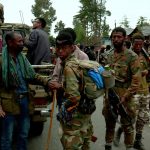 HEAVY FIGHTING IN TIGRAY REGION
 ETHIOPIA CONDEMNS THE ESCALATION AND PROVOCATIVE BEHAVIOUR OF SUDAN
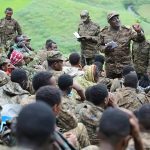 ABIY AHMED IS NOT MAKING ADVANCES ON THE BATTLEFIELDS
 TIGRAY DEFENCE FORCES DESTROY ETHIOPIAN ARMY DIVISIONS
 THE ETHIOPIAN ORTHODOX TEWAHEDO CHURCH RESISTANCE
 Unfulfilled Promises: Why the Pretoria Peace Agreement Has Failed Tigray
 Fano and OLA Alliance: Ethiopia’s Ceasefire Pact Against Abiy Ahmed Explained
 FANO Freedom Fighters Neutralise Traitor Burqa Gurmes in Merhabete Operation
 Fano Communique: North Eastern Command in Disarray After Fano’s Multi-Front Offensive
 Ethiopian People Rising: How the Alliance for Survival Is Defeating the Dictatorship